What did you dream?
Tap the one you had. Four books answer, and they do not agree.
This is somebody else’s dream, opened from a shared link. Tap your own above and it goes in your record instead.
Four traditions, kept apart
Do
Don’t
Your week
One night tells you nothing. Seven of them start to — not because the books get more accurate, but because what keeps coming back is a fact about you rather than about the symbol. This stays in your browser and goes nowhere.
Everything above is your reading. Everything below is where those four readings come from, and what sleep research can and cannot say about any of it.
The five books doing the reading
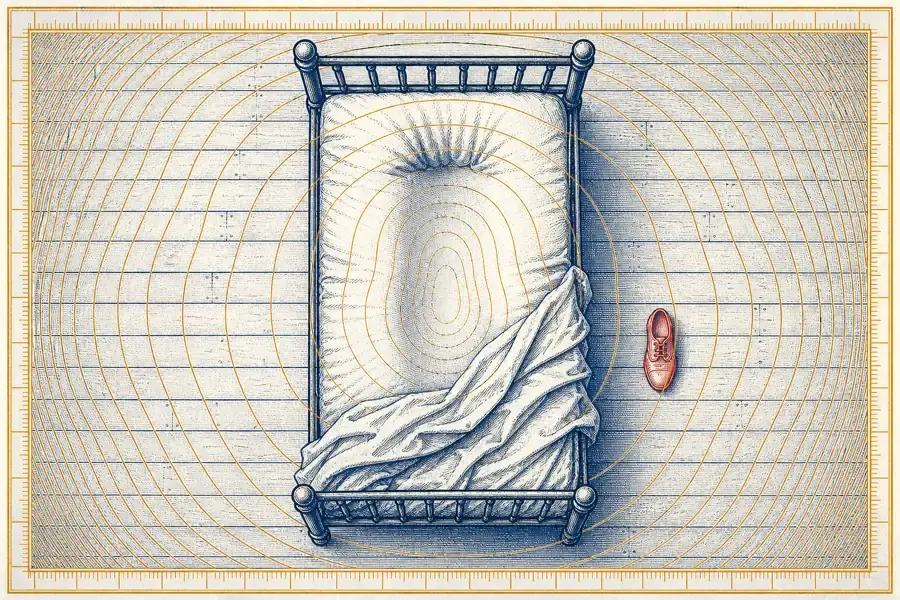
Artemidorus, the Duke of Zhou, Ibn Sirin, Freud, and the one that only counts
Dream manuals are one of the oldest continuously written genres there is. Five of them account for most of what circulates today, including most of what is reprinted online without any attribution at all.
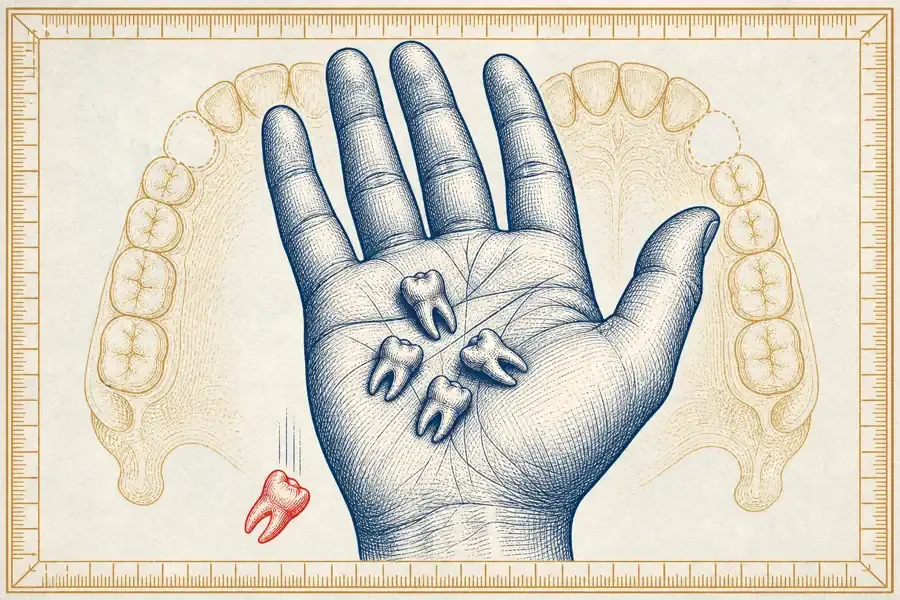
- Artemidorus, Oneirocritica, second century. Five books in Greek, and the oldest dream manual that survives whole. Its method is unusual: Artemidorus insists a symbol means nothing until you know the dreamer’s trade, status and habits. The same dream of losing teeth reads one way for a merchant and another for an athlete.
- The Duke of Zhou tradition, China. A dictionary rather than a method — symbol in, meaning out, arranged by category. It has been printed, copied and expanded for centuries, which is why no two editions match, and why almost nothing in it can be traced to a single author.
- Ibn Sirin, Islamic tradition, eighth century. Works ascribed to him classify dreams into three kinds before interpreting anything: true dreams, dreams from the self, and dreams from elsewhere. Only the first is held to be worth reading, which makes the tradition unusually cautious about its own practice.
- Freud, The Interpretation of Dreams, 1899. Turned the subject inward: the dream is not a message from outside but a disguised wish from inside. The enormous influence of this book is why modern readings so often ask what a symbol means to you.
- Hall and Van de Castle, 1966. Not interpretation at all, but counting — a coding system for what actually appears in dream reports: characters, settings, aggression, friendliness. It is the reason we can say anything quantitative about dream content, and it makes no claim about meaning whatsoever.
All eight, read four ways
How to read across a row
Read across a row and the readings rarely agree — several are flat opposites. Nothing in this table is a prediction, and where a tradition is vague, the vagueness is left in rather than tidied up.
| Dream | Greek | Chinese | Islamic | Freudian |
|---|
Why three traditions all landed on “it means the opposite”
The reversals in the last row are worth sitting with. Three unrelated traditions independently arrived at this dream means its opposite — which is either a deep shared insight or the most convenient rule a dream manual can contain, since it can never be shown wrong.
What is actually known
Six findings, none of which settle a row above
Sleep research cannot tell you what a dream means. It can tell you a surprising amount about what dreams are made of, and every one of these findings sits underneath the table above without settling a single row of it.
- Dreaming was only pinned to a measurable state in 1953. Aserinsky and Kleitman found that eye movements during sleep came in bursts, and that waking someone during a burst produced a vivid report. Everything written before that date — which is to say four of the five books above — was working without any way to tell when a dream was happening.
- It is not only REM. Reports come from non-REM sleep too. REM reports tend to be longer, stranger and more story-shaped, which is why they dominate the literature and why the earliest work overstated the link.
- Dreams mostly recycle waking life. The continuity finding is the most robust in the field: what occupies you awake turns up asleep, in altered form. That is a much duller claim than a message from elsewhere, and it explains most of what people bring to an interpreter.
- The common dreams really are common. Surveys of typical dream themes across different countries keep returning the same short list at the top — being chased, falling, school and exams, arriving late. The universality is real. What it implies is not.
- Counted content has its own biases. In the Hall and Van de Castle norms, men’s reports contained roughly twice as many male characters as female, while women’s were close to even; and across both, aggression appeared more often than friendliness. Whether that reflects dreaming or reporting is still argued about.
- Recall is the weakest link. You remember the dream you woke out of, not the ones you had. A night produces several; what reaches the morning is whichever one the alarm interrupted. Every dream dictionary ever written is a dictionary of last-dream-before-waking.
The part that has to be said plainly
No, they do not predict anything — and why they are still here
There is no evidence that dreams predict events. When a dream seems to come true, two ordinary things are usually doing the work: you dream about what is already on your mind, so the subject was likely anyway; and you remember the one that matched and not the hundreds that did not. Both effects are large. Neither requires anything unusual to be happening.
That does not make the traditions worthless, and it is not why they are on this page. A dream manual is a record of what a culture thought was worth worrying about — teeth, standing, debt, kin, water — and reading five of them across one row tells you a great deal about those five cultures. It tells you nothing about next week.
Read this index the way you would read the chart on the front page: as four traditions, kept separate, disagreeing in public. The moment they are blended into one confident answer, the most honest thing about the subject — that nobody agrees — is the thing that gets thrown away.